Slab Leak Repair Through the El Paso Year
Spring is wind season in El Paso, and it is home-systems season too. Dust rides the wind into every condenser coil and cooler pad, the first hot afternoons wake cooling systems from their winter idle, and swamp cooler changeover - pads, pumps, bleed lines - happens on every rooftop that still runs evaporative. A spring service visit, before the heat commits, is the most valuable appointment on the El Paso calendar.
El Paso winters are bright days and freezing nights. The danger hour is the desert dawn, when exposed and under-insulated pipes - hose bibs, garage runs, attic lines, cooler supply lines - reach their coldest. Winter work here is freeze protection and heating: furnaces and heat pumps that sat idle since March get their first real calls on the coldest nights of the year.
Summer is the proving season. Weeks of 100-degree afternoons run air conditioners near-continuously, cold water lines sweat in hot attics, and water heaters work against the highest inlet temperatures of the year. Then the monsoon folds humidity into the heat: refrigerated air must suddenly dehumidify as well as cool, and swamp coolers lose their edge entirely on the humid afternoons.
Slab Leak Repair in Depth
The slab leak compresses plumbing's hardest problem into one floor: the pipe is inaccessible by design, the water is destructive by physics, and the floor above is expensive by definition. Everything in the discipline - acoustic detection, pressure isolation, the spot-versus-reroute judgment - exists to shrink the collision between those three facts. Where the leak is exactly, and what the line's overall condition argues, decide the entire shape of the job.
The reroute deserves its reputation as slab country wisdom. Abandoning a failed under-slab run and delivering the same fixtures through the attic sounds indirect until the accounting is done: no slab cut, no flooring match, no dust - and a new line in inspectable space forever. On young systems with isolated mechanical failures, the spot repair wins on the same accounting. The evidence, as ever, referees - and homeowners should insist on hearing it argued both ways.
Choosing the Right Help
Choose the service that separates detection from repair in its own process - pinpoint first, options second. You should hear spot, reroute and repipe argued from your system's evidence, with the floor consequences of each stated plainly. The right answer varies by house; confidence that it is always the same answer is the warning sign.
The Climate Behind It
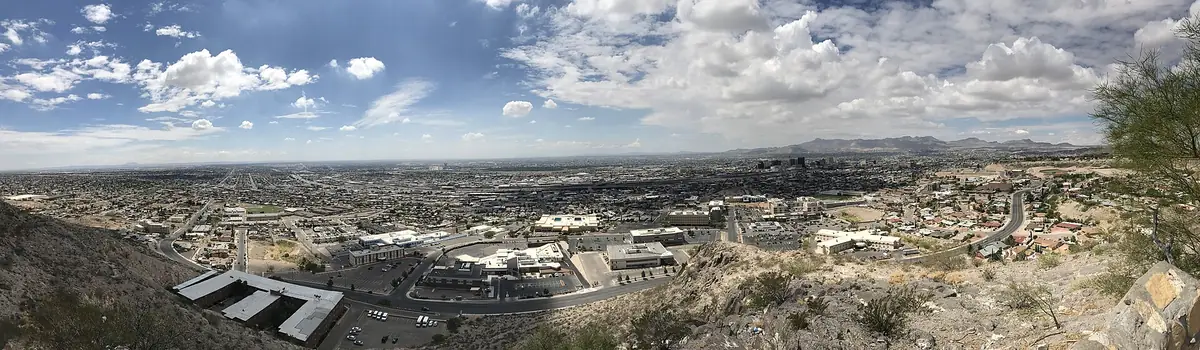
El Paso sits in the Chihuahuan Desert at roughly 3,700 feet, and the desert sets the terms for every pipe and compressor in the city: summer afternoons that pass 100 degrees for weeks, sun that bakes rooftops and outdoor units all day, and air dry enough that evaporative cooling works - most of the year. Home systems here do not age the way they age in humid or mild cities.
The water is the second force. El Paso's supply - drawn from the Rio Grande and the Hueco and Mesilla bolson aquifers - is very hard, loaded with the calcium and magnesium the desert geology hands it. That mineral load scales water heater tanks and elements, crusts faucet aerators and showerheads, spots every fixture, and quietly shortens the life of everything water touches.
How Slab Leak Repair Works
Detect and mark before any floor is touched
Acoustic pinpointing and pressure isolation produce a marked location and a named line - hot or cold, which run, which joint zone.
Choose the repair path from the map
Spot repair when the leak is isolated and the system is young; reroute when the line's path or condition argues against reopening it; repipe when the leaks have become a pattern.
Repair with minimal opening
The floor opening is sized to the confirmed mark - a tile or two, a contained slab cut - with dust control and the household kept livable.
Pressure-test and document
The repaired or rerouted line is tested under pressure before the floor closes, and you receive the leak's location and cause for the home's file.
Doing It Yourself vs a Professional
The DIY Route
- Jackhammering at the wettest tile chases water that traveled - the mark must come from listening, not flooring
- Epoxy spot fixes injected into a corroding line treat one pinhole of a systemic condition
- Ignoring a slow slab leak because the floor 'seems fine' lets it erode the soil the slab stands on
VS
The Professional Route
- Pinpoints acoustically and marks the spot before quoting the repair
- Presents the real options - spot, reroute, repipe - with the reasoning for each
- Pressure-tests the finished line and documents location and cause for your file
Keep It From Coming Back
Slab leaks reward the households that test and punish the ones that trust. The meter test and the warm-floor rule below are the earliest warnings this housing stock offers - both are free.
- Run the two-hour meter test twice a year - the earliest warning is free.
- Treat a warm floor spot as a same-week call, not a curiosity.
- Keep irrigation from ponding against slab edges; moisture balance matters.
- After the first slab leak, ask the pattern question - one leak is an event, two are a system.
- Soften water where copper corrosion is the established cause.
- Keep flooring photos when you remodel - they document what is under the slab for the next search.