El Paso AC & Heating

AC Repair in El Paso, TX

AC repair in El Paso - warm air, ice on the lines, short cycling, dead capacitors and tired compressors - diagnosed by measurement, not by guesswork.

Wind and dust run third. Spring is wind season, when dust storms roll off the desert and load every AC condenser coil, cooler pad and filter in the city. Then the monsoon arrives from July into September, humidity climbs, afternoon storms flood arroyos and low streets, and swamp coolers that worked in June suddenly cannot keep up.

And winter has teeth here, whatever the postcards say. Desert nights drop below freezing for stretches every year, and hard cold snaps - El Pasoans still measure them against the February 2011 freeze - burst exposed pipes across whole neighborhoods in a single night. Plumbing and cooling in this city are built, or should be, for all four of those forces at once.

Signs You Need AC Repair

Warm or room-temperature air from the vents

The classic triad: electrical failure in the outdoor unit, refrigerant loss, or airflow so restricted the coil cannot work. Measurement separates them in minutes.

Ice on the refrigerant lines or the indoor coil

Ice means the coil is running too cold - starved of airflow (filter, blower, duct) or of refrigerant. Running it iced destroys compressors; it is a shut-it-off symptom.

The outdoor unit hums but the fan will not start

The capacitor story, nine times in ten - the start components give the fan and compressor their kick, and desert heat cooks capacitors faster than any other part in the system.

Short cycling or constant running without cooling

Controls, charge or airflow again - or a compressor losing its strength and tripping on heat. Constant running with warm air is the system spending money to fail.

Water pooling around the indoor unit

The condensate drain is clogged or the pan is cracked. In monsoon season the drain runs gallons a day; its blockage is the most common water damage in cooled homes.

A breaker that trips when the AC starts

The compressor is straining - hard starts, failing windings or a locked rotor. Repeated resets damage what might still be a saveable unit.

Why AC Repair Is a Standing Job in El Paso

Capacitors live the hardest life in the outdoor unit: they are electrolytic devices in a metal box that bakes past 120 degrees on July afternoons, and they weaken a little with every heat cycle until one hot start is beyond them. Their failure is so tied to El Paso heat that experienced technicians carry them like spare tires - the diagnosis is still made by testing, because the same symptom can be the compressor itself.

Refrigerant charge is the second story. Systems do not 'use up' refrigerant - a low charge means a leak, and leaks live at joints, valves and coil tubing abraded by years of vibration and dust. Topping up without finding the leak rents cooling by the month. The honest repair weighs leak location and equipment age: a valve core is a fix; a leaking coil on an old system is a replacement conversation.

Airflow is the third, and the most neglected. A coil cannot absorb heat the blower does not deliver: collapsed filters, matted evaporative-side coils, closed or crushed ducts and failing blower motors all starve it - and a starved coil freezes, which starves it further. In El Paso's dust, airflow failures are maintenance failures wearing repair costumes, which is oddly good news: they are the least costly class of 'broken AC' there is.

AC Repair Through the El Paso Year

Fall is the repair window. The monsoon breaks, the heat lets go, and the weather turns calm and dry - the right weeks to fix what the summer exposed, flush the water heater before the holidays load it, and swap cooler systems over before the first freeze night finds water still sitting in their lines.

El Paso winters are bright days and freezing nights. The danger hour is the desert dawn, when exposed and under-insulated pipes - hose bibs, garage runs, attic lines, cooler supply lines - reach their coldest. Winter work here is freeze protection and heating: furnaces and heat pumps that sat idle since March get their first real calls on the coldest nights of the year.

Summer is the proving season. Weeks of 100-degree afternoons run air conditioners near-continuously, cold water lines sweat in hot attics, and water heaters work against the highest inlet temperatures of the year. Then the monsoon folds humidity into the heat: refrigerated air must suddenly dehumidify as well as cool, and swamp coolers lose their edge entirely on the humid afternoons.

AC Repair in Depth

AC diagnosis is a three-body problem: electrical, refrigerant and airflow interact so completely that each condition imitates the others' symptoms. The capacitor's failure and the coil's fouling both arrive as 'warm air'; the low charge and the collapsed filter both arrive as ice. Instruments exist to cut through the imitation - the manifold, the meter, the thermometer - and the repair trade's core skill is refusing to conclude before they speak.

There is an ethics to the sequence: simplest-and-most-likely causes are eliminated by test, not by replacement. A run of swapped parts that ends at the compressor has taxed the household for the diagnostician's education. The discipline described here - interview, measure, name the component, include its cause - is not thoroughness for its own sake; it is the difference between a repair bill and a parts bill with a repair eventually inside it.

Choosing the Right Help

Choose the repair service whose first move is instrumentation. The failed component should be named by values - capacitance, pressures, amp draws - and its cause addressed in the same ticket. Peak season tests everyone's discipline; the company that measures in July exactly as it measured in April is the one whose repairs hold in August.

The Climate Behind It

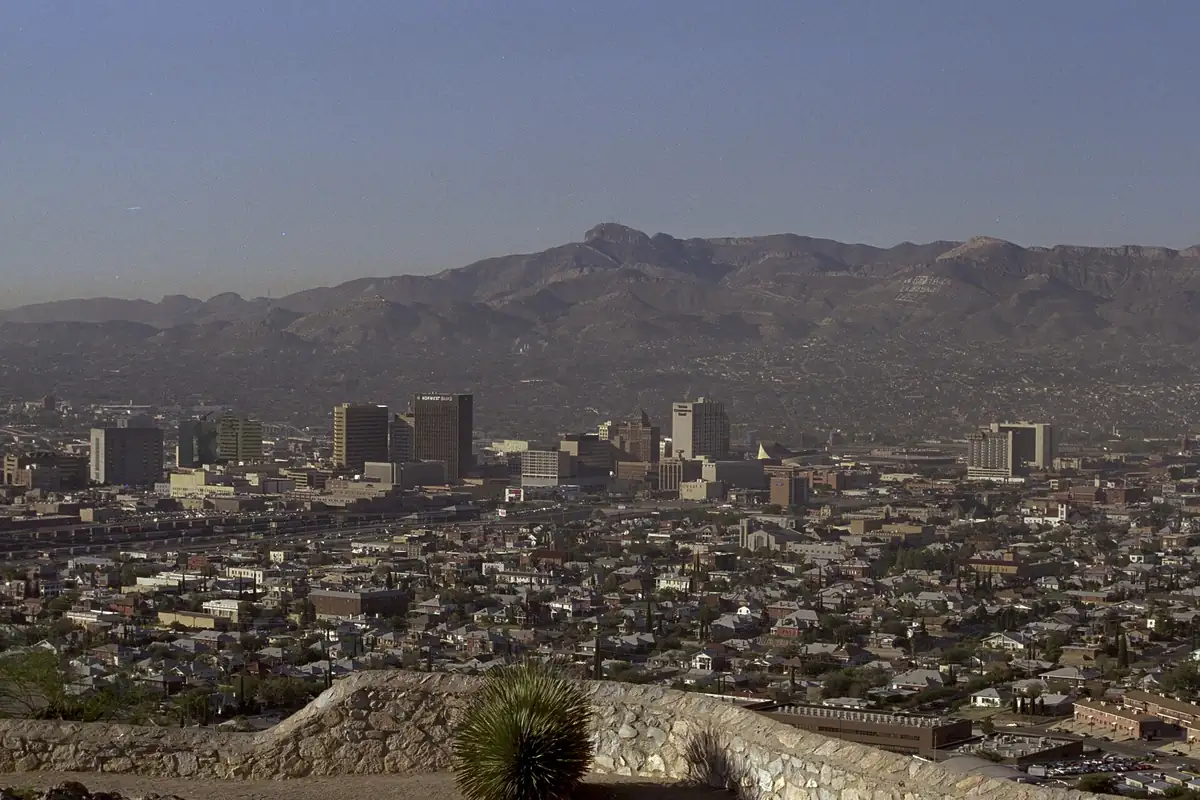
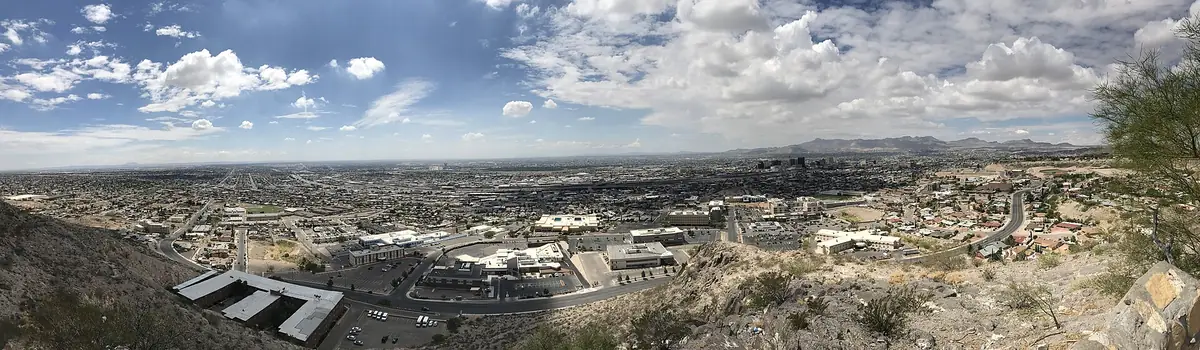
El Paso sits in the Chihuahuan Desert at roughly 3,700 feet, and the desert sets the terms for every pipe and compressor in the city: summer afternoons that pass 100 degrees for weeks, sun that bakes rooftops and outdoor units all day, and air dry enough that evaporative cooling works - most of the year. Home systems here do not age the way they age in humid or mild cities.

The water is the second force. El Paso's supply - drawn from the Rio Grande and the Hueco and Mesilla bolson aquifers - is very hard, loaded with the calcium and magnesium the desert geology hands it. That mineral load scales water heater tanks and elements, crusts faucet aerators and showerheads, spots every fixture, and quietly shortens the life of everything water touches.

How AC Repair Works

Make it safe and read the symptoms

Power state, thermostat call, breaker behavior and your description of the failure pattern - the interview narrows the electrical-refrigerant-airflow triad before a panel opens.

Measure the system under load

Pressures, temperatures, capacitor values, amp draws and airflow - the numbers name the failed component and the condition of everything around it.

Repair with the cause included

A capacitor replaced beside a matted coil gets the coil cleaned too; a charge restored gets its leak found and priced honestly. The fix aims at the failure's root, not its loudest symptom.

Verify under real conditions

The system runs through a full cycle before the visit ends - temperatures at the registers, cycling behavior and drain flow all confirmed, not assumed.

Doing It Yourself vs a Professional

The DIY Route

  • Swapping parts by symptom - capacitor, then contactor, then thermostat - spends compressor money on guesses
  • Running a freezing system 'to get through the night' grinds the compressor with liquid and ice
  • Adding refrigerant from a store kit without gauges or a leak search is a rental, not a repair
VS

The Professional Route

  • Measures first: pressures, temps, amp draws - the failed part is named by numbers
  • Separates the five-dollar causes from the compressor before quoting the compressor
  • Pairs every repair with its cause - coil, airflow, leak - so the failure does not simply re-book

Keep It From Coming Back

Most AC repairs in July were spring maintenance items in April. The prevention list for this service is therefore mostly a calendar: catch the capacitor, the charge and the coil while catching them is cheap.

  • Book the spring check - capacitors and charge are tested before they choose their July moment.
  • Keep filters changed on the dust schedule; a collapsed filter freezes coils.
  • Rinse the outdoor coil after dust season - heat rejection is the whole game.
  • Treat ice on the lines as a stop sign: off, fan on, call.
  • Keep condensate drains treated and clear through the monsoon humidity.
  • Note new sounds and longer run-times in a phone note - patterns are diagnostics.
AC Repair in the Valley Communities

The communities around El Paso share its heat and its water - with their own twists of wells, septic systems, altitude and age.

AC Repair in Sunland Park

Sunland Park is the New Mexico city pressed against El Paso's west flank - home to the Sunland Park Racetrack and Casino, neighborhoods under Mount Cristo Rey, and streets that cross the state line without changing their character. Its residents shop, work and live on both sides of the line.

AC Repair in Fort Bliss Area

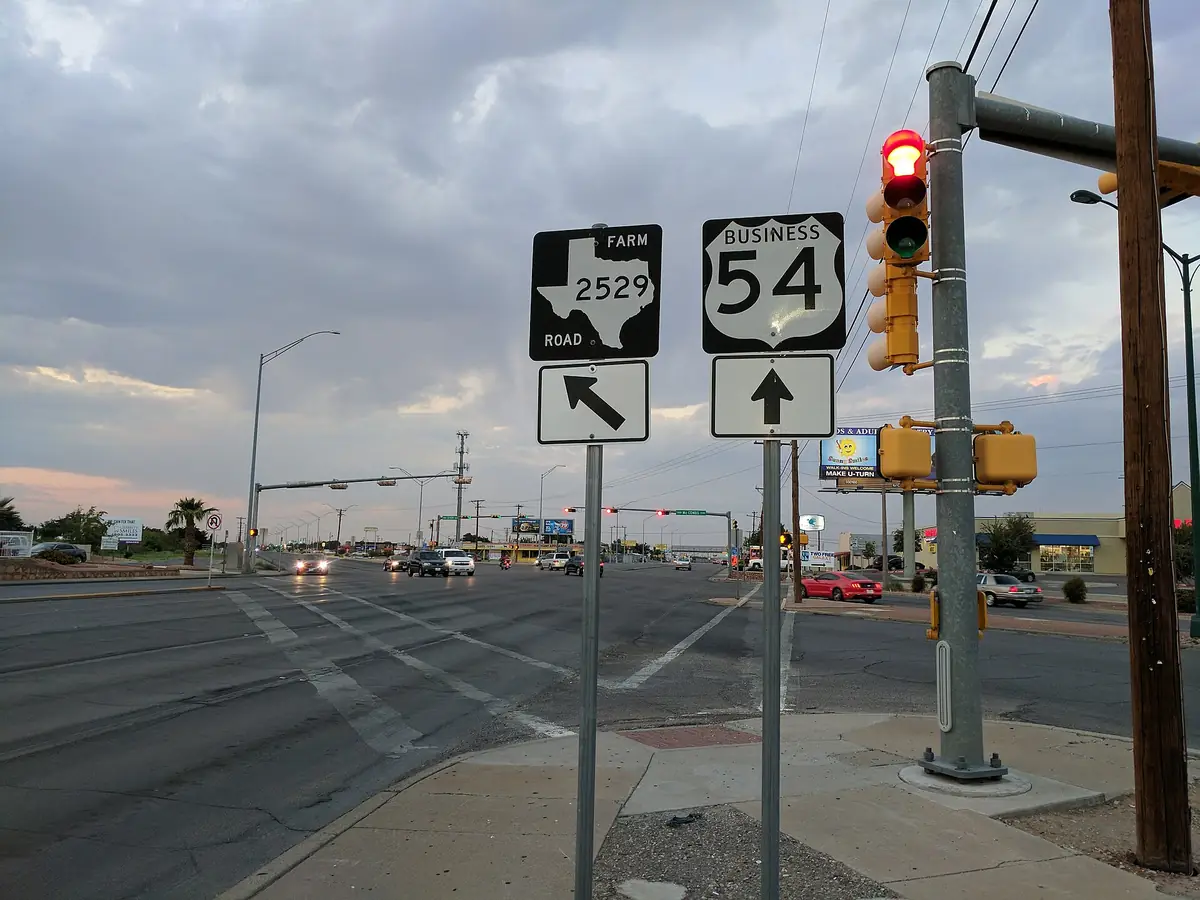
The Fort Bliss area wraps around one of the Army's largest installations - the neighborhoods off-post along US-54 and Airport Road where soldiers and their families rent and buy, plus the commercial strips that serve the post. Turnover is a way of life here; rental properties cycle tenants every few years.

AC Repair in Anthony

Anthony straddles the Texas-New Mexico line at the top of the Upper Valley - a small farming town of orchards, dairies and quiet streets where the state line runs down the middle of town. It is the valley's rural bookend, twenty minutes and a world away from downtown El Paso.

AC Repair in Fabens

Fabens is the valley's downriver farming town - cotton and chile fields along the Rio Grande, a main street of older storefronts, and neighborhoods where families have farmed the same valley floor for generations. It is the last El Paso County community before the river road heads toward Tornillo.

Where AC Repair Is Needed Most

On the east side and up against the mountain - Eastside, Far East El Paso, Westside and Northeast, Central - the housing runs from fast-built subdivisions to base-adjacent rentals, and ac repair follows the construction: new systems aging in hard water at record pace, warranty-era fittings reaching their first failures together, and summer loads that test every installation shortcut.

Across the center, the west and the valleys - Upper Valley, Lower Valley, Mission Valley and Horizon City, Socorro, Canutillo - sit the city's oldest homes, its historic districts and its foothills customs, which together make this the steadiest ac repair territory in the city.

Beyond the city line, the same work runs in Sunland Park, Fort Bliss Area, Anthony, Fabens - mission towns, desert subdivisions and valley communities where wells, septic systems and long service runs add their own chapters. Every one of these area pages carries the local detail for ac repair in that community.

Coverage, In Full

AC Repair runs across the whole service map: the Eastside and Far East El Paso; the Westside and the Upper Valley; the Northeast and the Fort Bliss area; Central El Paso and Downtown; the Lower Valley and Mission Valley; and beyond the city in Horizon City, Socorro, Canutillo, Sunland Park, Anthony and Fabens. One call covers all of it - the local pages above carry the detail for each. If your street is not named here, call anyway: routes grow with demand, and most El Paso addresses are already within reach of a scheduled run.

From the El Paso Home Guides

Monsoon Season and Your Cooling System: El Paso's Humidity Weeks

From July into September the monsoon swaps El Paso's cooling problem: not hotter, but humid. Refrigerated systems must dehumidify as they cool, condensate drains run at full capacity, and swamp coolers lose their physical margin on the wettest afternoons. Prepare the drain before the season: cleared, trapped, treated, with its safety switch tested - monsoon condensate is gallons a day, and the clogged drain is the season's signature ceiling stain.

Read the Guide

Ductless Mini-Splits in El Paso: Where They Shine and Where They Don't

Mini-splits deliver zoned refrigerated cooling and efficient heating without ducts - ideal for El Paso's casitas, additions, converted garages, adobe homes without duct paths, and bedrooms that never matched the house. Success is design: per-room loads, heads placed for air throw and condensate drainage, lines run clean with a deep vacuum at install. Casual sizing and placement produce the disappointments that give the technology its rare bad reviews.

Read the Guide

Swamp Cooler or Refrigerated Air in El Paso? An Honest Comparison

Swamp coolers cool beautifully and cheaply in El Paso's dry months and physically cannot in the monsoon's humid weeks; refrigerated air cools and dehumidifies in all of it, sealed against dust, at a higher running cost. Neither wins the whole year for every household. Decide by your pain: if August humidity, dust and allergies rule your complaints, refrigeration answers them; if dry-month economy rules and August is tolerable, a maintained cooler remains a rational machine. Hybrids split the difference by season.

Read the Guide

AC Repair Questions

What are the most common AC repairs in El Paso?

Capacitors lead by a wide margin at heat-wave season, then contactors, condensate drain blockages, refrigerant leaks at valves and coils, and blower motors strained by dust-loaded filters. The list is short because the causes are concentrated: heat, dust and run-hours.

Why did my AC quit on the hottest day?

Because that is when its margin ran out. A weak capacitor, a slightly low charge, a dirty coil - each is survivable at 95 degrees and fatal at 108, when the system must run at full output for hours. Peak-day failures are spring warnings that were postponed.

Can a low refrigerant charge just be topped up?

It can, and sometimes that is the proportionate call on older equipment - with the leak rate explained honestly. On sound equipment the right job is find the leak, repair it, then charge by weight and verify. A system that needs topping every summer is a leak with a subscription.

What affects the cost of AC repair in El Paso?

The failed component, the refrigerant type and amount if charge work is involved, the equipment's age and access (attic air handlers cost more time than closet ones), and whether the cause - coil, airflow, leak - is repaired with it. Measurement first is what keeps the number honest.

Why is my AC in El Paso blowing warm air?

One of three families: electrical (the outdoor unit is not starting - capacitor, contactor, breaker), refrigerant (a leak has dropped the charge below cooling strength) or airflow (the coil is frozen or starved). All three feel identical at the register, which is why the repair starts with instruments rather than opinions.

Is ice on my AC lines in El Paso an emergency?

It is a stop-and-call. Shut the cooling off, leave the fan running to thaw, and book the repair - running an iced system can slug the compressor with liquid refrigerant and convert a modest repair into a compressor replacement. The ice itself is the symptom of restricted airflow or low charge, both diagnosable the same visit.

How long do AC capacitors last in El Paso?

Shorter than anywhere mild - they are heat-aged every summer afternoon they serve. Their failure is the most common no-cool call in the city at the start of every heat wave. The encouraging half: they are among the most affordable repairs in the trade, and testing one takes a minute.

Should I repair or replace my AC in El Paso?

The evidence decides: a strong compressor on a sound coil with one failed part is a repair at any reasonable age. A failed compressor, a leaking coil, or stacked failures on aging equipment argue the other way - especially where the refrigerant generation is obsolete. You should hear the numbers for both paths with the reasoning attached.

Please note: El Paso Home Services is an independent directory and referral service, not a plumbing or HVAC contractor. The professionals reachable through this site are independent businesses; any agreement for work is between you and the professional you engage. Service information on this site is general educational material - the scope of any real work is set by an on-site inspection.

A Burst Pipe, a Backed-Up Drain or an AC That Quit in July?

One call connects you with a local home-services professional serving El Paso - plumbing and cooling help, matched to your part of the city.

📞 Call Now