Swamp coolers cool beautifully and cheaply in El Paso's dry months and physically cannot in the monsoon's humid weeks; refrigerated air cools and dehumidifies in all of it, sealed against dust, at a higher running cost. Neither wins the whole year for every household.
Problem: Swamp coolers cool beautifully and cheaply in El Paso's dry months and physically cannot in the monsoon's humid weeks; refrigerated air cools and dehumidifies in all of it, sealed against dust, at a higher running cost. Neither wins the whole year for every household.
Solution: Decide by your pain: if August humidity, dust and allergies rule your complaints, refrigeration answers them; if dry-month economy rules and August is tolerable, a maintained cooler remains a rational machine. Hybrids split the difference by season.
When to call: Price the paths against your house - its ducts, panel and layout - with a load calculation and a conversion assessment, not with a neighbor's project as the template.
Every El Paso household eventually holds this debate, usually in August, usually out loud, in a warm kitchen. It deserves better than folklore. This guide walks both technologies through the local year - the physics, the months, the dust, the water, the money - so the decision rests on your house and your tolerances rather than on a salesman's season.
The El Paso Angle
The water is the second force. El Paso's supply - drawn from the Rio Grande and the Hueco and Mesilla bolson aquifers - is very hard, loaded with the calcium and magnesium the desert geology hands it. That mineral load scales water heater tanks and elements, crusts faucet aerators and showerheads, spots every fixture, and quietly shortens the life of everything water touches.
The Physics, Without the Folklore
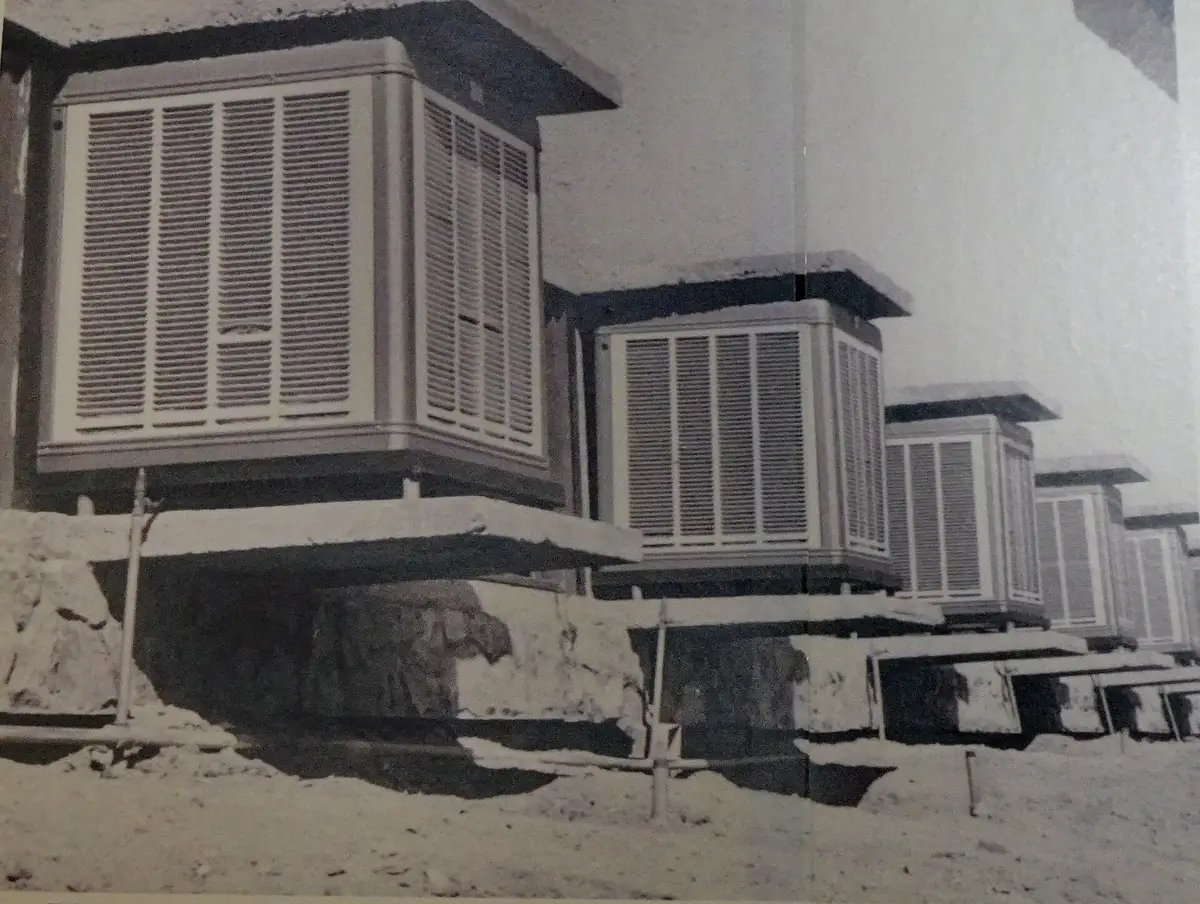
An evaporative cooler trades water for cooling: desert air pulled through wet pads surrenders heat to evaporation and enters the house cooler and more humid. Its ceiling is set by the wet-bulb temperature - in June's dry air, far below the afternoon's peak, so a good cooler delivers genuinely cold air for very little electricity and a steady water draw. As humidity rises, the wet bulb rises toward the dry bulb, and the margin the cooler lives on evaporates with it.
Refrigerated air moves heat with a compressor cycle, indifferent to humidity except that it wrings moisture out as it works - supply air cold and dry in June and in the middle of a monsoon thunderstorm alike. Its costs are electricity and complexity; its freedoms are sealing (windows shut, dust out), dehumidification, and cooling that answers to a thermostat rather than to the sky's moisture.
The Year, Month by Month
April through June belongs to the cooler: dry, increasingly hot, and made for evaporation - the months when cooler owners have the least costly comfort in the city. July through mid-September is contested: monsoon humidity arrives in waves, coolers fade on the humid afternoons and recover on the dry ones, and refrigerated houses simply stop watching the sky. The shoulder weeks of fall cool down by either technology or by open windows.
Winter adds the heating chapter: cooler homes still need a furnace, heat pump or other heat source (the cooler is drained and asleep), while refrigerated homes with heat pumps heat from the same equipment. Dust season - spring's winds - argues in refrigeration's favor all by itself: a sealed house with filtration versus a cooler drawing the desert's airborne geology through wet pads is a comparison allergy households make in one storm.
PROBLEM
→
SOLUTION
The Money and the Mess, Honestly
Running costs favor the cooler heavily in its season: a pump, a fan motor and water against a compressor's full draw. Ownership costs complicate the picture: coolers demand seasonal changeovers, pads on a mineral schedule, and carry a live water line on the roof with its freeze and leak exposures; refrigeration demands filters, spring service and a larger repair ledger when components fail. Over a decade, both machines are honest - the totals differ by household usage more than by technology.
Comfort quality is the decider most households underweight until August: refrigeration holds a set temperature and low humidity, keeps the house sealed and quieter against dust and street, and cools rooms evenly through ducts or zones. Evaporative cooling adds humidity (welcome in June, oppressive in August), needs exhaust openings, and moves a great deal of desert air through the home. Neither profile is a flaw; they are different climates indoors, and the household's lungs and patience choose between them.
The Hybrid Answer, Examined
The hybrid - cooler for the dry months, a refrigerated system (often mini-split zones) for the monsoon - persists in El Paso because it is genuinely rational: each machine works the season physics favors, and the refrigerated half is sized for humidity weeks rather than for June's peak. The discipline it demands is changeover honesty: the cooler drained and closed in its off-season, the refrigerated half serviced in spring, neither neglected because the other exists.
Where hybrids disappoint, it is usually arithmetic: two systems' maintenance for a household that would have been content with one. Cost it whole - equipment, rituals, repairs - against your own August diary, and the hybrid either justifies itself in your numbers or quietly resolves into a single-system decision.
What Your Neighbors' Houses Cannot Tell You
Conversion stories travel by anecdote and mislead by construction: the neighbor's delight rode on their ducts' condition, their exposure, their panel - none of which your house shares. An adobe with no duct path and a tract home with perfect attic ducts are having different conversations that happen to use the same words. The transferable evidence is your own: your bills, your August diary, your house's measured readiness.
Bring that evidence to the design conversation and the quotes sharpen accordingly - contractors price specifics, not generalities. The households who convert happiest are the ones who arrived with their own data and left with a design, not the ones who imported a conclusion.
Myth vs Fact
The Myth
Refrigerated air is always much more expensive to run.
VS
The Fact
It costs more per hour in its season, but the comparison includes the cooler's water draw, its seasonal labor and its August non-performance. Across a full year, per household, the gap is real but smaller than folklore - and it buys sealed, dehumidified comfort the cooler cannot sell at any price in monsoon weeks.
The Related Service, In Depth
A conversion is a house changing climate philosophies: from open, evaporative, water-based cooling to sealed, refrigerated, dehumidifying comfort. Nearly every system in the house is touched by the change - ducts, power, drainage, even how windows are used - which is why conversions planned as renovations of the whole comfort system succeed, and ones bought as appliance swaps disappoint.
That is the service side of this guide's subject. When you are ready, the Refrigerated Air Conversion page carries the process, the coverage by area and the number to call.
The Process, Step by Step
Name your actual pain
August humidity, dust and allergies, noise, water use, bills - rank them. The ranking, not the brochure, selects the technology.
Audit the house's readiness
Ducts present or absent, panel capacity, attic access, cooler condition - the conversion's true scope lives in these answers.
Price all three paths
Cooler renewal, full conversion, hybrid - against your house's measured load, with each path's seasonal performance stated.
Decide for the decade, not the week
Both machines are long commitments of maintenance rhythm; choose the rhythm your household will actually keep.
Prevention Checklist
Whichever you choose, keep its seasonal ritual - changeover or spring tune-up - on a fixed calendar date.
If you keep the cooler, protect its water line every fall without exception.
If you convert, keep the old cooler only inside a designed hybrid plan.
Track one August of electric and water bills before deciding; your own numbers outrank every estimate.
For allergy households, weigh the sealed-house argument explicitly - it is often the deciding one.
Revisit the decision at equipment end-of-life, not mid-life; conversions timed to failures cost least.
A Field Checklist for Your Own Home
August comfort honestly diarized for one season
Your pain ranked before any quote is taken.
Conversion readiness assessed
Ducts, panel and layout read by measurement, not assumption.
Running ledgers compared on YOUR bills
Electric, water and maintenance across a full year.
Decision timed to equipment end-of-life or remodel
The cheap moment chosen deliberately.
What the Paperwork Should Show
Accessibility belongs in the decision too: cooler maintenance happens on a roof, twice a year, forever - a real consideration for aging households that a conversion to ground-level serviced equipment quietly retires. Comfort decisions are household decisions, and the household's ladder years are part of the honest math alongside the utility bills.
Rentals and investment properties run the same physics with an added filter: refrigerated air photographs, lists and retains differently in this market, and cooler maintenance splits awkwardly between landlord and tenant. Owners should count turnover and call-outs in their ledger, not just utilities - the technology choice is also a management choice.
How a Professional Works This Problem
Designers of conversions will tell you the honest sentence in every proposal is the duct paragraph: whether your home's duct path is an asset, a project, or an absence is what the whole price hangs on. Read that paragraph first; the equipment list is the easy part.
Require any conversion proposal to state the home's calculated load and the duct plan in writing - the two places where conversions succeed or disappoint are both decided on paper.
The Bottom Line
Neither technology is the villain of an El Paso summer; each is a trade the desert offers on different terms. Make the trade with your own diary, your own bills and your own house's measurements - and August becomes a month you chose, not a month you endure.
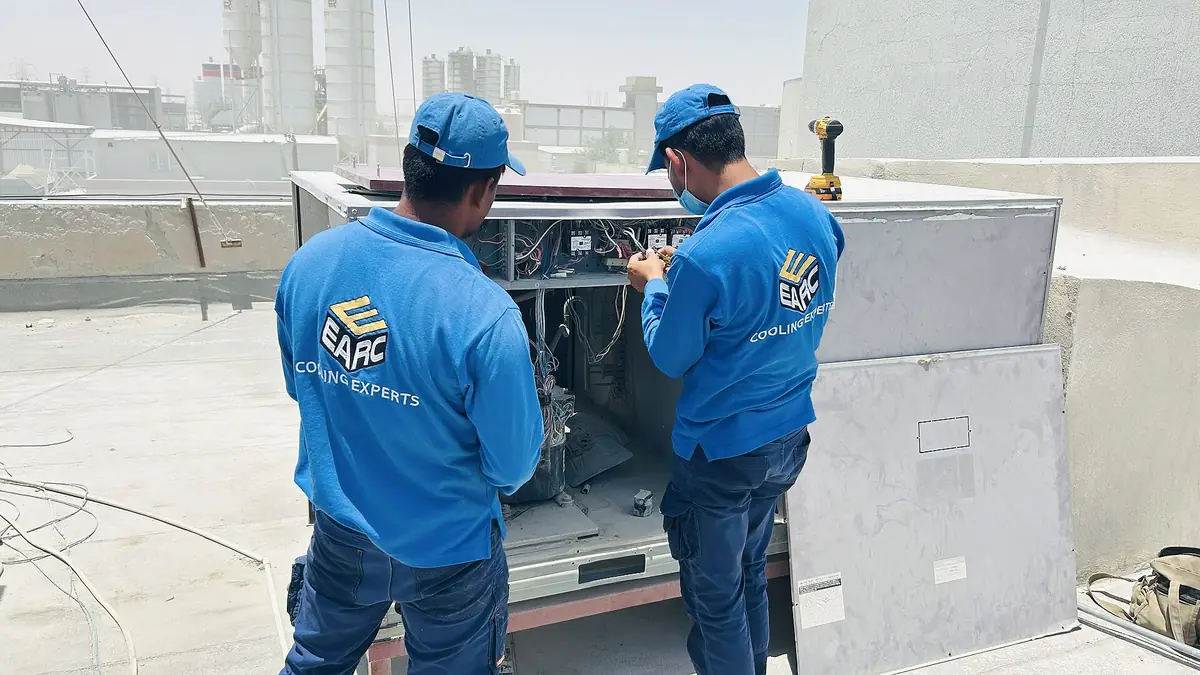
El Paso summers do not test AC systems gradually; the first 105-degree week applies full load to equipment that sat in dust all spring. The systems that fail then were almost all findable in April - dirty coils, drifting capacitors, low charge, clogged drains.
From July into September the monsoon swaps El Paso's cooling problem: not hotter, but humid. Refrigerated systems must dehumidify as they cool, condensate drains run at full capacity, and swamp coolers lose their physical margin on the wettest afternoons.
Can a swamp cooler ever match refrigerated air in El Paso?
In June, on comfort per dollar, it beats it. In a monsoon week, it cannot reach it at any maintenance level - the physics of wet bulb forbid it. The honest comparison is seasonal, which is why so many local households end up hybrid: each technology working the months it wins.
Will refrigerated air dry out my home too much?
It dehumidifies to comfort ranges, not to desert extremes - the monsoon moisture it removes is moisture the house does not want. In the dry months the difference from evaporative cooling is noticeable: cooler homes add humidity the desert lacks, refrigerated homes simply do not. Households sensitive to dryness sometimes add a humidifier - a small appliance against a system decision.
What happens to my water bill if I keep the cooler?
Evaporation plus the mineral-purging bleed is a real, continuous draw through the cooling season, rising with the heat. It is the price of the cooler's cheap electricity, and in water-conscious households it belongs in the ledger beside the electric savings - another reason the decision is a household's values, computed, not a slogan.
Is converting worth it for an older El Paso home?
Where the household plans to stay, the comfort transformation is the largest single upgrade available to a cooler-era home, and the market recognizes it. The honest caveats are the project's scope - ducts, panel, condensate - and its timing: conversions planned for spring or fall, or married to a remodel or a cooler's end-of-life, capture the value at the least disruption.
Please note: El Paso Home Services is an independent directory and referral service, not a plumbing or HVAC contractor. The professionals reachable through this site are independent businesses; any agreement for work is between you and the professional you engage. Service information on this site is general educational material - the scope of any real work is set by an on-site inspection.
A Burst Pipe, a Backed-Up Drain or an AC That Quit in July?
One call connects you with a local home-services professional serving El Paso - plumbing and cooling help, matched to your part of the city.