El Paso AC & Heating

Refrigerated Air Conversion in El Paso, TX

Converting from swamp cooler to refrigerated air in El Paso - ducts or ductless, electrical and condensate planned as one project - for comfort that survives the monsoon.

Wind and dust run third. Spring is wind season, when dust storms roll off the desert and load every AC condenser coil, cooler pad and filter in the city. Then the monsoon arrives from July into September, humidity climbs, afternoon storms flood arroyos and low streets, and swamp coolers that worked in June suddenly cannot keep up.

And winter has teeth here, whatever the postcards say. Desert nights drop below freezing for stretches every year, and hard cold snaps - El Pasoans still measure them against the February 2011 freeze - burst exposed pipes across whole neighborhoods in a single night. Plumbing and cooling in this city are built, or should be, for all four of those forces at once.

Signs You Need Refrigerated Air Conversion

Monsoon weeks make your home unlivable

The defining symptom: the cooler is maintained, the pads are new, and the house is still humid-warm in August. That is not a cooler fault - it is the technology's limit, and the conversion's reason to exist.

Dust, pollen and allergies rule the house

Evaporative cooling breathes the desert in - dust, pollen and everything the wind carries. Sealed refrigerated air with real filtration is the standard answer where health drives the decision.

You are adding refrigerated rooms one by one

Window units and portable coolers multiplying across bedrooms are a conversion being bought in installments - with the worst efficiency and comfort of any path.

The cooler cabinet or roof curb is failing

A rusted-out cooler at end-of-life is the natural decision point: another cooler, or the conversion the household has discussed every August for years.

A remodel is opening walls and ceilings anyway

Ducts route least costly when the house is already open. Conversions timed to remodels save the disruption twice.

Home value and rental competitiveness

In much of El Paso's market, refrigerated air is the expected standard; conversions in the older districts are investments the resale conversation recognizes immediately.

Why Refrigerated Air Conversion Is a Standing Job in El Paso

Duct design is the conversion's make-or-break discipline. Swamp cooler ductwork, where it exists, was sized for evaporation's high volumes and usually cannot serve refrigerated air's lower-volume, higher-pressure delivery - and many cooler homes have no ducts at all, just a central discharge. A proper conversion computes each room's load and routes supply and return air to serve it; reusing cooler ducts uncritically is the classic way to buy a new system and keep the old discomfort.

Electrical and condensate are the second and third engineering chapters. Refrigerated systems draw serious power; older panels in the cooler-era districts often need capacity work. And refrigeration makes water constantly in the monsoon - condensate needs a trapped, sloped drain with safety shutoff, routed where a clog announces itself before it stains a ceiling. Both chapters are invisible in a finished conversion and decisive in its daily life.

The hybrid option deserves its honest place: many El Paso households keep the cooler for the dry months - when it cools beautifully for very little - and add refrigerated capacity (central or mini-split) for the monsoon. The conversion decision is therefore three-way: full conversion, staged hybrid, or cooler renewal - and the right answer follows the house's ducts, panel and the household's comfort priorities.

Refrigerated Air Conversion Through the El Paso Year

Fall is the repair window. The monsoon breaks, the heat lets go, and the weather turns calm and dry - the right weeks to fix what the summer exposed, flush the water heater before the holidays load it, and swap cooler systems over before the first freeze night finds water still sitting in their lines.

Summer is the proving season. Weeks of 100-degree afternoons run air conditioners near-continuously, cold water lines sweat in hot attics, and water heaters work against the highest inlet temperatures of the year. Then the monsoon folds humidity into the heat: refrigerated air must suddenly dehumidify as well as cool, and swamp coolers lose their edge entirely on the humid afternoons.

Spring is wind season in El Paso, and it is home-systems season too. Dust rides the wind into every condenser coil and cooler pad, the first hot afternoons wake cooling systems from their winter idle, and swamp cooler changeover - pads, pumps, bleed lines - happens on every rooftop that still runs evaporative. A spring service visit, before the heat commits, is the most valuable appointment on the El Paso calendar.

Refrigerated Air Conversion in Depth

A conversion is a house changing climate philosophies: from open, evaporative, water-based cooling to sealed, refrigerated, dehumidifying comfort. Nearly every system in the house is touched by the change - ducts, power, drainage, even how windows are used - which is why conversions planned as renovations of the whole comfort system succeed, and ones bought as appliance swaps disappoint.

The engineering honesty lies in the unglamorous chapters: the return air path nobody photographs, the condensate drain nobody sees until it fails, the panel capacity nobody wants to pay for. Conversions are quoted in equipment and built in these details. The assessment's job is to surface every chapter before the contract, so the household chooses its scope with the whole book open.

Choosing the Right Help

Choose the conversion contractor by the assessment: load calculation in writing, duct and panel verdicts measured, the three design paths priced honestly. Conversions fail on skipped chapters - returns, condensate, capacity - and the assessment is where chapters get included. If the quote arrives before the attic visit, keep looking.

The Climate Behind It

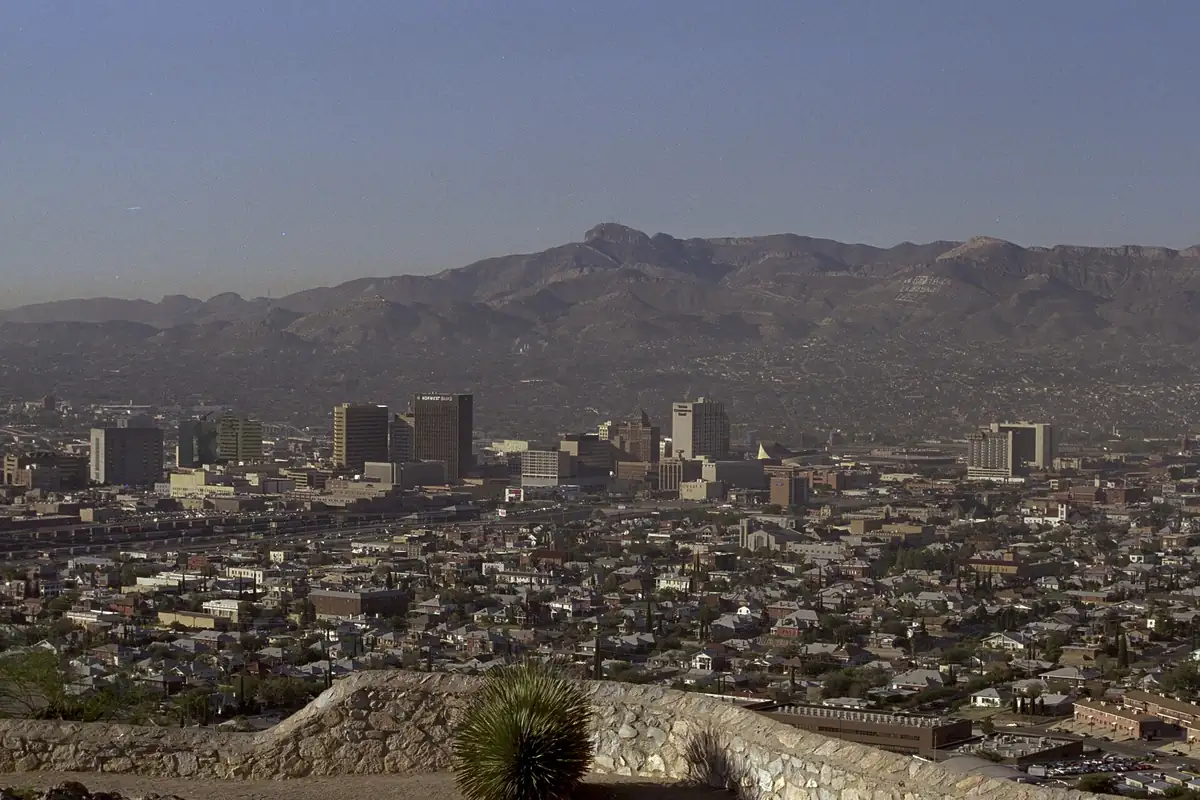
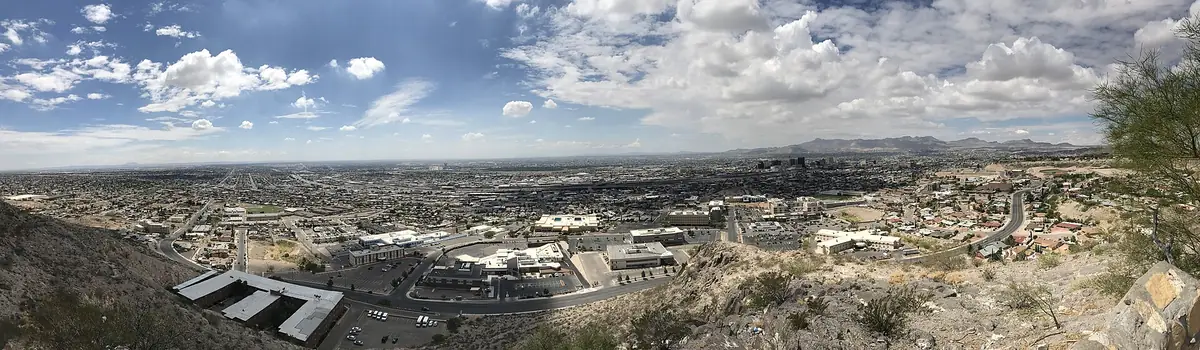
El Paso sits in the Chihuahuan Desert at roughly 3,700 feet, and the desert sets the terms for every pipe and compressor in the city: summer afternoons that pass 100 degrees for weeks, sun that bakes rooftops and outdoor units all day, and air dry enough that evaporative cooling works - most of the year. Home systems here do not age the way they age in humid or mild cities.

The water is the second force. El Paso's supply - drawn from the Rio Grande and the Hueco and Mesilla bolson aquifers - is very hard, loaded with the calcium and magnesium the desert geology hands it. That mineral load scales water heater tanks and elements, crusts faucet aerators and showerheads, spots every fixture, and quietly shortens the life of everything water touches.

How Refrigerated Air Conversion Works

Assess the house as a conversion candidate

Load calculation, duct inventory (or its absence), electrical panel capacity, attic and roof geometry - the project's real shape, measured before any option is priced.

Design: ducted, ductless or hybrid

The three paths laid against your house and priorities with honest trade-offs - comfort, disruption, efficiency and scope - so the design is chosen, not defaulted.

Execute as one project

Ductwork, equipment, electrical and condensate installed as a single coordinated scope, permits included, the old cooler removed or properly retired.

Commission and rebalance the house

Airflow balanced room by room, condensate tested under load, controls handed over - the conversion is verified as a system, not started as an appliance.

Doing It Yourself vs a Professional

The DIY Route

  • Bolting a condenser to cooler ducts delivers refrigerated air at evaporative duct math - and the old discomfort at new prices
  • Skipping the condensate drain design installs a ceiling-stain generator above the living room
  • Undersizing the electrical work to avoid a panel upgrade trades a project cost for a reliability problem
VS

The Professional Route

  • Starts with the house: load, ducts and panel measured before options are priced
  • Presents ducted, ductless and hybrid paths with the trade-offs stated plainly
  • Installs condensate as a designed system - trap, slope, safety switch - not an afterthought

Keep It From Coming Back

A conversion stays successful by the details being maintained as designed: drains, filters and the balance verified at commissioning. These habits protect the project's engineering after the crew leaves.

  • Get the load calculation in writing - it disciplines every later decision.
  • Ask what happens to cooler-era ducts explicitly; silence on the point is an answer.
  • Confirm panel capacity before equipment is ordered, not during install week.
  • Route condensate where a clog is visible early - with a safety switch, always.
  • Time conversions for spring or fall where possible; August conversions queue.
  • Keep the old cooler only if the hybrid plan says so - an orphaned water line is a freeze leak waiting.
Refrigerated Air Conversion in the Valley Communities

The communities around El Paso share its heat and its water - with their own twists of wells, septic systems, altitude and age.

Refrigerated Air Conversion in Sunland Park

Sunland Park is the New Mexico city pressed against El Paso's west flank - home to the Sunland Park Racetrack and Casino, neighborhoods under Mount Cristo Rey, and streets that cross the state line without changing their character. Its residents shop, work and live on both sides of the line.

Refrigerated Air Conversion in Fort Bliss Area

The Fort Bliss area wraps around one of the Army's largest installations - the neighborhoods off-post along US-54 and Airport Road where soldiers and their families rent and buy, plus the commercial strips that serve the post. Turnover is a way of life here; rental properties cycle tenants every few years.

Refrigerated Air Conversion in Anthony

Anthony straddles the Texas-New Mexico line at the top of the Upper Valley - a small farming town of orchards, dairies and quiet streets where the state line runs down the middle of town. It is the valley's rural bookend, twenty minutes and a world away from downtown El Paso.

Refrigerated Air Conversion in Fabens

Fabens is the valley's downriver farming town - cotton and chile fields along the Rio Grande, a main street of older storefronts, and neighborhoods where families have farmed the same valley floor for generations. It is the last El Paso County community before the river road heads toward Tornillo.

Where Refrigerated Air Conversion Is Needed Most

On the east side and up against the mountain - Eastside, Far East El Paso, Westside and Northeast, Central - the housing runs from fast-built subdivisions to base-adjacent rentals, and refrigerated air conversion follows the construction: new systems aging in hard water at record pace, warranty-era fittings reaching their first failures together, and summer loads that test every installation shortcut.

Across the center, the west and the valleys - Upper Valley, Lower Valley, Mission Valley and Horizon City, Socorro, Canutillo - sit the city's oldest homes, its historic districts and its foothills customs, which together make this the steadiest refrigerated air conversion territory in the city.

Beyond the city line, the same work runs in Sunland Park, Fort Bliss Area, Anthony, Fabens - mission towns, desert subdivisions and valley communities where wells, septic systems and long service runs add their own chapters. Every one of these area pages carries the local detail for refrigerated air conversion in that community.

Coverage, In Full

Refrigerated Air Conversion runs across the whole service map: the Eastside and Far East El Paso; the Westside and the Upper Valley; the Northeast and the Fort Bliss area; Central El Paso and Downtown; the Lower Valley and Mission Valley; and beyond the city in Horizon City, Socorro, Canutillo, Sunland Park, Anthony and Fabens. One call covers all of it - the local pages above carry the detail for each. If your street is not named here, call anyway: routes grow with demand, and most El Paso addresses are already within reach of a scheduled run.

From the El Paso Home Guides

Swamp Cooler or Refrigerated Air in El Paso? An Honest Comparison

Swamp coolers cool beautifully and cheaply in El Paso's dry months and physically cannot in the monsoon's humid weeks; refrigerated air cools and dehumidifies in all of it, sealed against dust, at a higher running cost. Neither wins the whole year for every household. Decide by your pain: if August humidity, dust and allergies rule your complaints, refrigeration answers them; if dry-month economy rules and August is tolerable, a maintained cooler remains a rational machine. Hybrids split the difference by season.

Read the Guide

Monsoon Season and Your Cooling System: El Paso's Humidity Weeks

From July into September the monsoon swaps El Paso's cooling problem: not hotter, but humid. Refrigerated systems must dehumidify as they cool, condensate drains run at full capacity, and swamp coolers lose their physical margin on the wettest afternoons. Prepare the drain before the season: cleared, trapped, treated, with its safety switch tested - monsoon condensate is gallons a day, and the clogged drain is the season's signature ceiling stain.

Read the Guide

Ductless Mini-Splits in El Paso: Where They Shine and Where They Don't

Mini-splits deliver zoned refrigerated cooling and efficient heating without ducts - ideal for El Paso's casitas, additions, converted garages, adobe homes without duct paths, and bedrooms that never matched the house. Success is design: per-room loads, heads placed for air throw and condensate drainage, lines run clean with a deep vacuum at install. Casual sizing and placement produce the disappointments that give the technology its rare bad reviews.

Read the Guide

Refrigerated Air Conversion Questions

Does a conversion in El Paso require permits?

Yes - mechanical and electrical permits with inspection cover the new equipment, ducts and panel work. The documentation also matters at resale: a permitted conversion is a listed feature; an unpermitted one is a negotiation problem.

What happens to the old swamp cooler?

It is removed and the roof curb sealed as part of a full conversion, or serviced and retained in a hybrid design. Its water line is drained and capped either way - an abandoned live line on a roof is a freeze claim waiting for January.

Can I convert in stages?

Yes - a common El Paso path refrigerates the bedrooms first (often ductless), lives a monsoon, then completes the design. Staging works when the first stage was designed as part of the whole; the assessment draws that whole picture up front so stages do not strand each other.

What affects the cost of a conversion in El Paso?

The design path (ducted, ductless, hybrid), duct construction or its absence, panel capacity work, equipment tier and the home's size and geometry. Conversions are the most house-specific work in the trade - the number honestly follows the assessment, never precedes it.

How long does a swamp-to-refrigerated conversion in El Paso take?

A ducted conversion in a home without suitable ducts is a multi-day project - ductwork is the long pole - while homes with reusable duct paths or ductless designs move faster. The assessment produces the real schedule, and most households plan it for a mild-weather window so the house is never without cooling in a heat wave.

Can my existing cooler ducts be reused in El Paso?

Sometimes partially, rarely wholly. Cooler ducts are oversized for refrigeration and usually lack returns; sections are sometimes adaptable, but the honest answer comes from measuring them against the new system's airflow design. Any installer who promises full reuse without measuring is selling, not engineering.

Ducted, ductless or hybrid - how do I choose for my El Paso home?

Ducted suits homes with attic access and a whole-house comfort goal. Ductless suits homes where ducts are impractical - adobe, flat roofs, casitas - and where zoning is valued. Hybrid suits households that love the cooler's cheap dry-month cooling and only need refrigeration for the monsoon. The assessment maps your house to the paths with costs attached to each.

Will refrigerated air raise my bills versus the cooler in El Paso?

Refrigeration uses more electricity than evaporation - that is the honest trade for sealed, dehumidified comfort. The size of the difference depends on how much of the season the system runs and its efficiency tier; hybrid households often land lowest of all by letting each technology work its own season. The assessment shows the arithmetic for your house.

Please note: El Paso Home Services is an independent directory and referral service, not a plumbing or HVAC contractor. The professionals reachable through this site are independent businesses; any agreement for work is between you and the professional you engage. Service information on this site is general educational material - the scope of any real work is set by an on-site inspection.

A Burst Pipe, a Backed-Up Drain or an AC That Quit in July?

One call connects you with a local home-services professional serving El Paso - plumbing and cooling help, matched to your part of the city.

📞 Call Now