El Paso's water is among the hardest municipal supplies in Texas - dissolved calcium and magnesium from desert aquifers precipitate onto everything hot or evaporating, filling water heaters with sediment and crusting every fixture.
Problem: El Paso's water is among the hardest municipal supplies in Texas - dissolved calcium and magnesium from desert aquifers precipitate onto everything hot or evaporating, filling water heaters with sediment and crusting every fixture.
Solution: True softening removes the minerals and stops the damage cycle house-wide; conditioning changes scale's behavior without removing it; fixture-level cleaning manages symptoms. The right answer follows what the water is costing your specific home.
When to call: Get the water tested when appliances start dying young, when crust returns within weeks of cleaning at multiple fixtures, or before any repipe or heater replacement you want to protect.
Every El Paso homeowner knows the white crust. Fewer know it is a single story told at every outlet in the house: geology dissolved in the water supply, precipitating wherever water heats or dries. This guide follows that story from the aquifer to the water heater's sediment bed, and then weighs the responses honestly - because the softener conversation in this city is full of equipment sold against the wrong goals.
The El Paso Angle
Wind and dust run third. Spring is wind season, when dust storms roll off the desert and load every AC condenser coil, cooler pad and filter in the city. Then the monsoon arrives from July into September, humidity climbs, afternoon storms flood arroyos and low streets, and swamp coolers that worked in June suddenly cannot keep up.
Where the Hardness Comes From
El Paso drinks from the desert: the Hueco and Mesilla bolson aquifers and the Rio Grande, all of them water that has traveled through limestone and gypsum country. The journey loads it with calcium and magnesium - the hardness minerals - and delivers it to your tap carrying the region's geology in solution. Nothing is wrong with the water's safety; everything about its mineral load is consequential for the machines it passes through.
Heat and evaporation are the triggers. Dissolved minerals stay politely in solution in the pipe; the moment water is heated in a tank or left to dry on glass, the minerals come out as scale - the white-to-tan rock that coats elements, fills tanks, crusts aerators and films shower doors. Every hot or drying surface in the house is a precipitation site, which is why hard water's damage map is so predictable.
The Damage Ledger, System by System
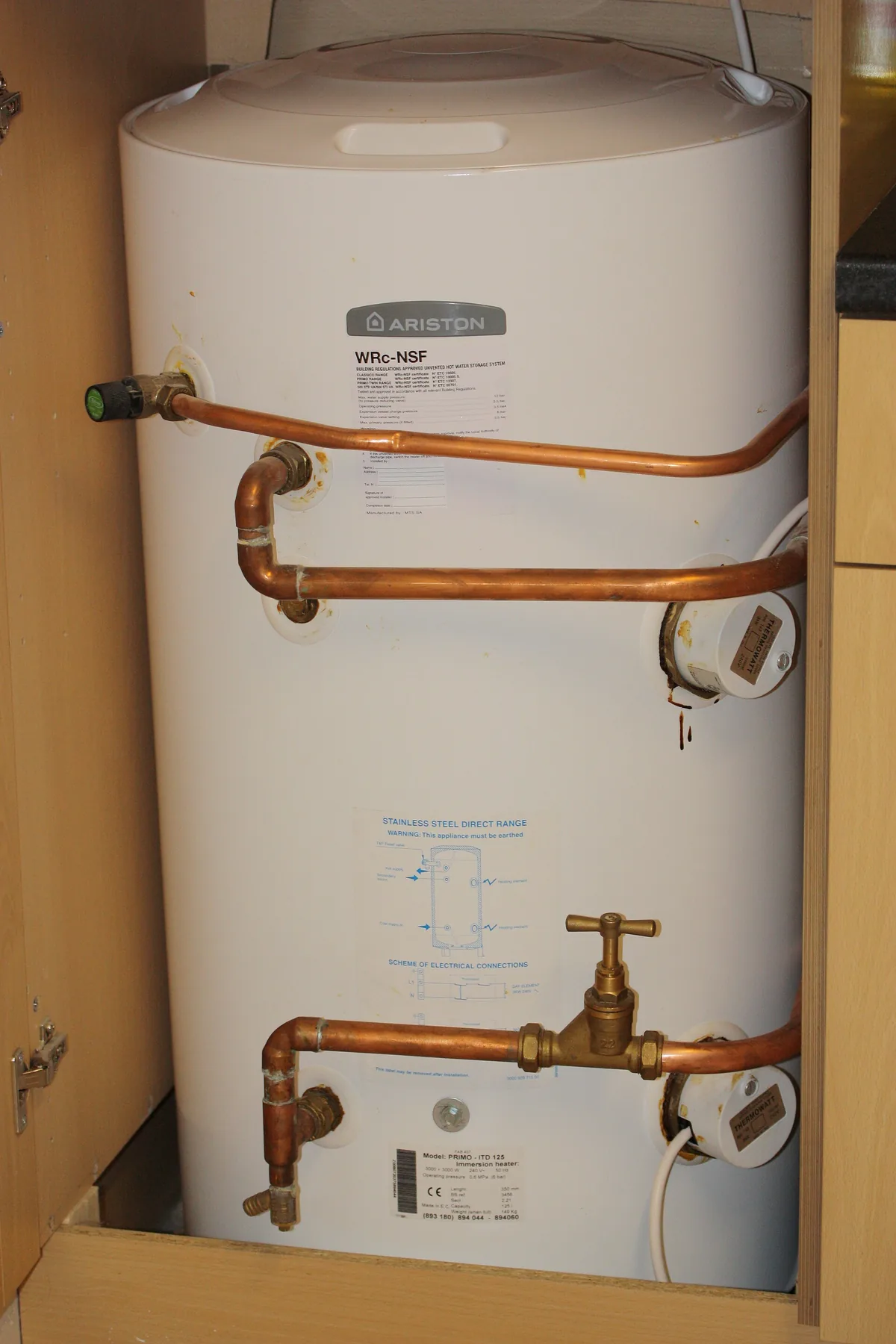
The water heater pays first and most: sediment beds inches deep, elements armored in scale, anode rods consumed in half their design life, tanks dying years early. Fixtures pay second: cartridges stiffen and score, flappers warp on mineral grit, angle stops freeze in place. Appliances pay third - dishwasher and washing machine valves and elements wearing the same coats - and the household pays throughout in soap that will not lather and cleaning that never stays done.
The ledger's subtle entry is plumbing itself. Scale narrows pipe bores over decades, adding its restriction to galvanized corrosion's in the older districts. And because all of it is gradual, households adapt to declining pressure, weaker flushes and lukewarm capacity as if they were the house's personality - until a new fixture or a guest's comment reveals how far the baseline has slid.
PROBLEM
→
SOLUTION
Softening vs Conditioning vs Managing
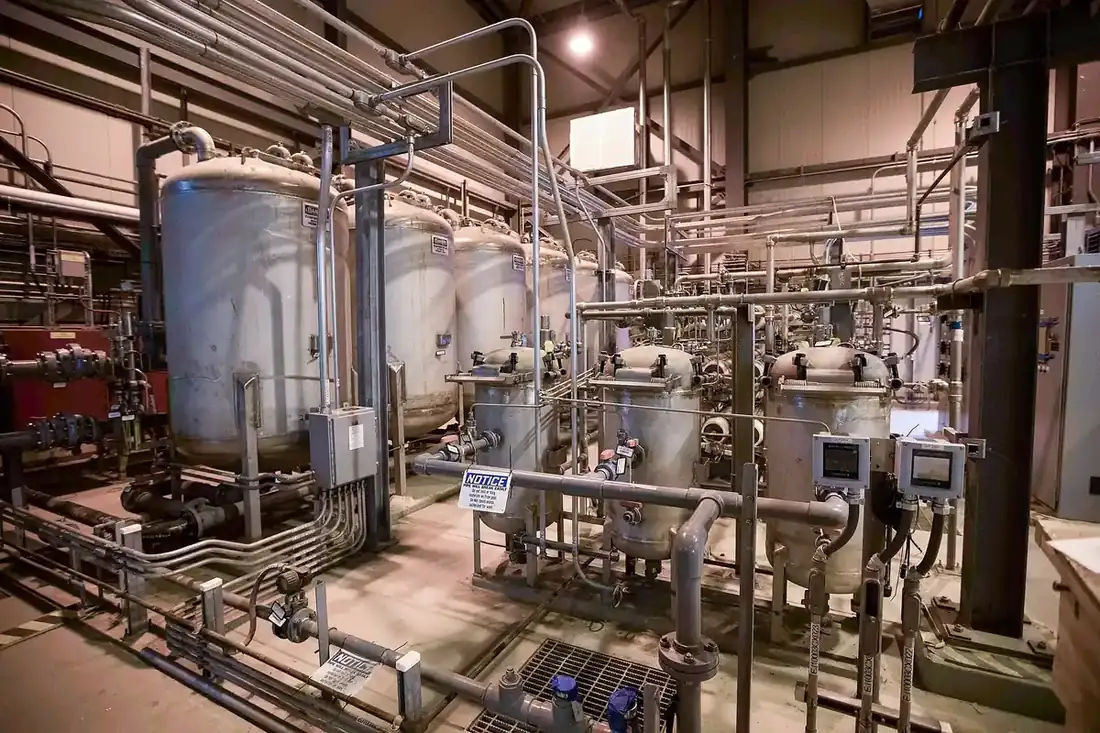
Ion-exchange softening removes calcium and magnesium outright: scale stops forming, existing deposits slowly soften, soap behaves, and water tests soft. It is the only approach that changes the water's chemistry, and in a supply this hard it is the benchmark the others are measured against. Its costs are the equipment, the salt, the regeneration water and the maintenance covenant.
Salt-free conditioning leaves the minerals in but crystallizes them so they adhere far less - scale prevention without soft water's feel or soap behavior. Filtration addresses chlorine, taste and sediment, not hardness. And managing - flushing, descaling, vinegar rituals - accepts the water and pays in labor and parts instead. Each is honest for a household whose goals match it; the failures come from mismatches sold as matches.
Testing Your Own Water, Honestly
The cheap test strip kits from a hardware store tell the truth about the headline: total hardness, measured in grains per gallon or parts per million, classifies water from soft to very hard - and most El Paso addresses read firmly at the top of the scale. Strips will also hint at chlorine and pH. What they cannot do is size a system or read your household's consumption; they confirm the regime so the conversation starts from measurement instead of from a doorstep performance.
If your home has well water - pockets of the Lower Valley and outlying areas still run private wells - the test that matters is a laboratory panel: hardness plus iron, manganese, sediment and bacteria, because well chemistry varies by the lot and drives equipment choices that city water never raises. The lab fee is small against a softener mis-specified for iron it cannot handle.
What Hard Water Is Quietly Costing
Itemize the regime's tax and it stops sounding like a sales topic: water heaters retired years early to sediment; aerators and cartridges on a replacement rhythm; extra detergent, soap and rinse agents fighting the same chemistry in every load; descaling labor - yours or a service's - at every fixture on a schedule. None of it is dramatic. All of it is annual, and it compounds across every water-using appliance simultaneously.
Set against it, the treatment ledger is one system's maintenance: salt, an occasional service, a modest water overhead at regeneration. Households that run both columns honestly usually find the arithmetic less interesting than the daily relief - showers that rinse clean, glassware that dries clear, a heater that stops rumbling. The money frames the decision; the mornings settle it.
Myth vs Fact
The Myth
Hard water is a health hazard that must be removed.
VS
The Fact
Hardness minerals are dietary minerals; the case against hard water is mechanical and economic - scale, wear, soap waste - not medical. Treat it for your plumbing's sake and your comfort's, with clear eyes about which is which.
The Related Service, In Depth
Softening is the only plumbing service whose patient is the water itself. Every other call treats a symptom in a fixture or a line; this one changes the chemistry that writes all the symptoms. That upstream position is what makes its effects feel disproportionate: heaters stop accumulating, fixtures stop crusting, soaps wake up, and the parts-replacement rhythm of the whole house slows at once.
That is the service side of this guide's subject. When you are ready, the Water Softeners & Filtration page carries the process, the coverage by area and the number to call.
The Process, Step by Step
Test your water before buying anything
A hardness number in grains per gallon, at your tap, is the foundation of every sizing and technology decision.
Inventory what the water is costing you
Heater ages, fixture replacements, cleaning labor, soap and appliance history - the ledger tells you which goal you are actually buying.
Match the technology to the goal
Removal for the full damage cycle, conditioning for scale adhesion, filtration for taste - stated against the ledger, not the brochure.
Size and place for the whole house
Capacity from counted usage, placement protecting the heater and every fixture, irrigation sensibly split off.
Prevention Checklist
Flush the water heater yearly whether or not you soften - the sediment already there does not care about future water.
Soak aerators and showerheads in vinegar on a season's rhythm.
Dye-test toilets and service cartridges at their first symptoms; mineral wear is least costly early.
Photograph fixture crust before cleaning - the return rate is your hardness diary.
If you soften, keep the salt filled; protection lapses are silent.
Re-test hardness after any system change - settings should match the water you actually have.
A Field Checklist for Your Own Home
Water tested and class recorded
Strips or lab panel - the regime named in numbers.
Softening decision made on math, not doorstep sales
Grain load x household gallons, salt and regeneration overheads counted.
Anode and sediment maintenance calendared
The heater's two hard-water appointments, dated.
Fixture care rhythm set
Aerators, cartridges and showerheads on a descaling rotation.
What the Paperwork Should Show
Hard-water decisions made early compound quietly: a softener installed at move-in protects every appliance from its first day, while one installed in year eight inherits eight years of scale that no softening reverses. Wherever you are in the timeline, the appliances bought from today forward are the ones your decision protects - which is why the new water heater, the new dishwasher and the move are the natural decision moments.
And keep the classification honest: if your test comes back at the low end of hard, the maintenance-only path may genuinely serve you. This guide's loyalty is to the measurement, not to the equipment - El Paso simply measures hard often enough that treatment is the usual conclusion.
How a Professional Works This Problem
A water-treatment professional reads your classification differently than a salesperson does: in grains per gallon against your meter's annual gallons, because that product is the salt appetite and the regeneration calendar. If a proposal cannot state both numbers, it is describing inventory, not your water.
Ask any treating company to state the grain load behind their sizing math and the regeneration schedule they set - the two numbers that separate a sized system from a sold one.
The Bottom Line
Hard water is the most patient force in an El Paso house, and the most manageable once it is measured. Test it, choose the treatment your arithmetic supports, and put the maintenance on a calendar - the plumbing will spend the next decade quietly proving you right.
El Paso's clear desert nights drop below freezing in fast, deep swings, and the pipes that burst are predictable: hose bibs, garage and laundry runs on outside walls, attic lines, and undrained swamp cooler supply lines - the 2011 freeze wrote the lesson citywide.
In El Paso water, an unmaintained tank water heater commonly dies years ahead of its national reputation; a flushed tank with its anode rod renewed runs years longer. The maintenance, not the brand, is the main lifespan variable in this city.
Is El Paso water safe to drink despite the hardness?
Hardness is an aesthetic and mechanical issue, not a safety one - calcium and magnesium are ordinary dietary minerals, and the supply is regulated and tested like any municipal water. The case for treatment is made in appliance life, fixture wear and household labor, not in health. Households wanting taste or chlorine improvement are shopping filtration, a different shelf.
Will a softener make my water feel slimy?
It makes it feel slippery, which is soap working without minerals consuming it and no film being deposited on skin. Most people adjust within a week and then find hard water harsh when they travel. The sensation is the chemistry, not an additive - softened water has had minerals removed, not lotions added.
Can I soften just the hot water side?
You can, and it protects the heater and hot fixtures - the highest-damage path. Cold-side fixtures, toilet internals and hose bibs stay in the mineral war, and toilets are among the most expensive cold-water wear sites in the house. Partial protection is a legitimate budget choice made honestly, not an accident of plumbing layout.
How much maintenance does a softener need here?
Salt kept in the brine tank, an annual look at the tank and venturi, and settings verified against your water. Metered modern units regenerate by usage, so the covenant is genuinely small - minutes a month. Neglect does not damage them quickly; it just quietly returns your house to hard water.
Please note: El Paso Home Services is an independent directory and referral service, not a plumbing or HVAC contractor. The professionals reachable through this site are independent businesses; any agreement for work is between you and the professional you engage. Service information on this site is general educational material - the scope of any real work is set by an on-site inspection.
A Burst Pipe, a Backed-Up Drain or an AC That Quit in July?
One call connects you with a local home-services professional serving El Paso - plumbing and cooling help, matched to your part of the city.